A geography of sources
The same country can contain a dust layer, marine spray, combustion particles and humid haze at the same time.
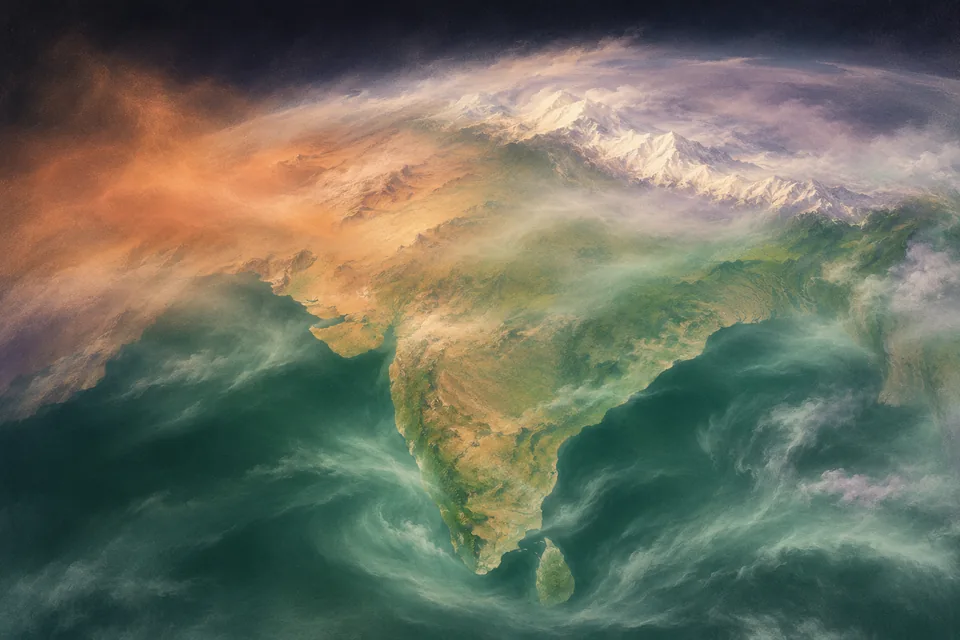
India’s atmospheric environment is shaped by its varied land surfaces, dense settlements, agriculture, industry and surrounding seas. Mineral dust enters from dry regions within and beyond the subcontinent. Sea spray contributes over coasts and ocean. Transport, power generation, household fuel use, industry and open burning contribute particles and gases that can form particles later.
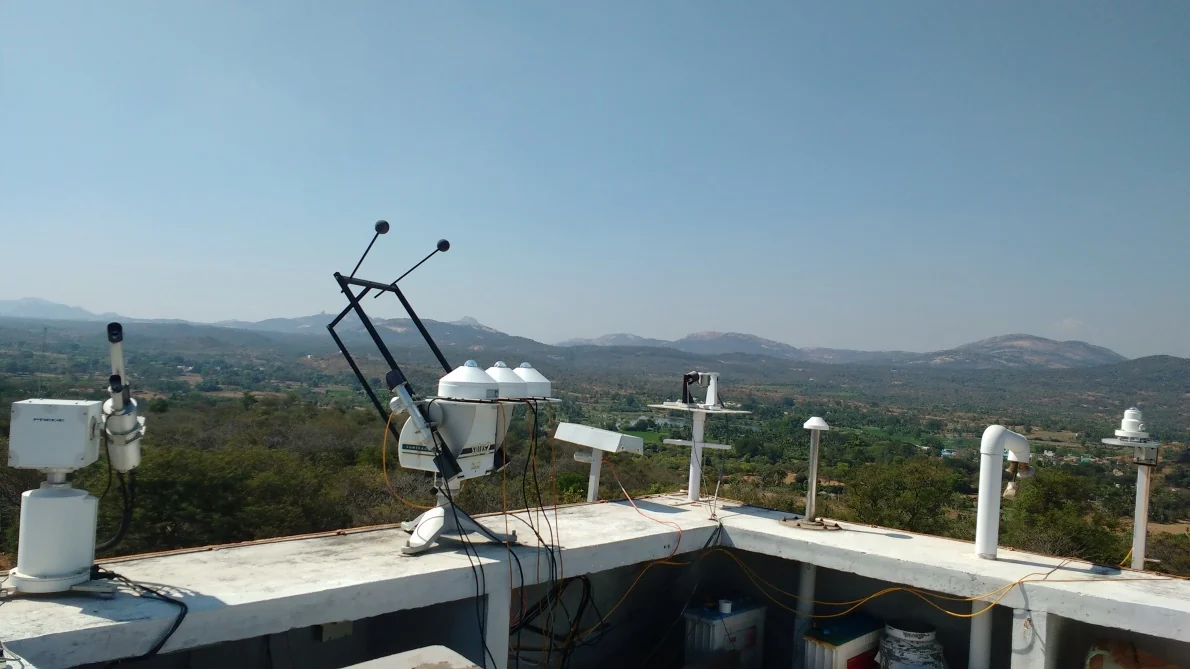
The mixture reaching an instrument depends on wind, altitude, chemical processing and removal along the way. An urban station can observe transported dust; an ocean expedition can encounter continental emissions. Local geography determines the immediate surroundings, but the air has a history.
Understanding that history requires several properties together. Optical depth can reveal how strongly the whole column attenuates light, while composition, absorption and size measurements constrain what produced the signal.